Predation in Action
http://news.nationalgeographic.com/news/2015/02/150224-octopus-predators-prey-crabs-attacks-animals-science/
https://www.youtube.com/watch?v=sirLuCz4-9I
Thursday, February 26, 2015

Environmental Ethics

Reading
Environmental Ethics- Stanford Encyclopedia of Philosophy
http://plato.stanford.edu/entries/ethics-environmental/
Environmental Ethics- University of California
http://cnx.org/content/m16743/latest/
Environmental Ethics- Wikipedia
http://en.wikipedia.org/wiki/Environmental_ethics#Libertarian_extension
Aldo Leopold's Land Ethic- EoE
http://www.eoearth.org/article/Aldo_Leopold%27s_Land_Ethic
The Land Ethic- by Aldo Leopold, http://www.aldoleopold.org/AldoLeopold/LandEthic.pdf
Anthropocentric versis Non-Anthropocentric Environmental Ethics
http://ocw.capcollege.bc.ca/philosophy/phil-208-environmental-ethics/non-anthropocentric.htm
Environmental Ethics and Gaia Theory- EoE
http://www.eoearth.org/article/Environmental_ethics_and_the_Gaia_theory
Deep Ecology- EoE
http://www.eoearth.org/article/Deep_ecology
Ecofeminism- Wikipedia
http://en.wikipedia.org/wiki/Ecofeminism
The Gaia Hypothesis
http://erg.ucd.ie/arupa/references/gaia.html
Tuesday, February 24, 2015
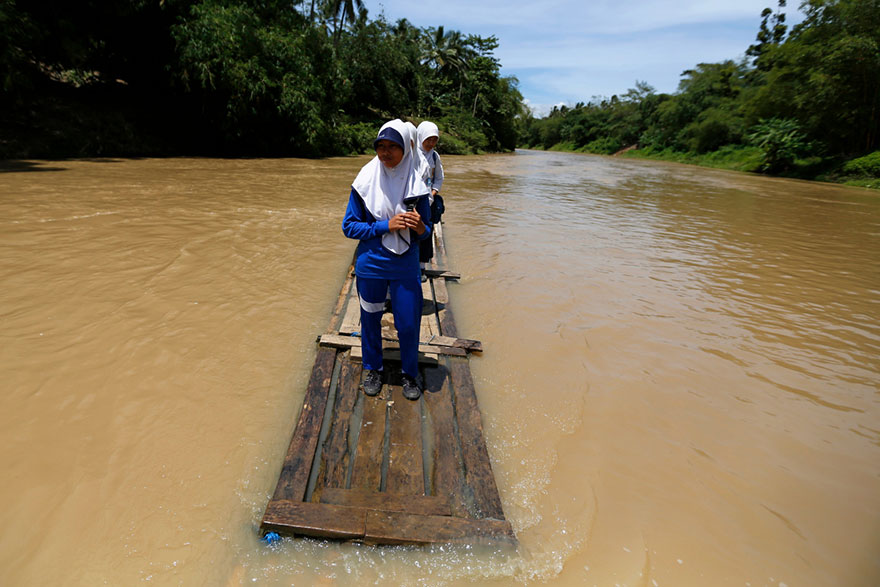
Kids Headed to School
Towards a New Environmentalism

The Earth is a Ponzi Scheme on the Verge of Collapse
http://www.alternet.org/story/135525/the_earth_is_a_ponzi_scheme_on_the_verge_of_collapse
Here are links to that propose a new way to think about conservation and environmentalism.
Time to reboot: towards a new Environmentalism. by Joe Zammit-Lucia
http://www.iucn.org/knowledge/focus/nature_for_all/?9493/Time-to-Re-Boot-Towards-a-New-Environmentalism
Conservation is not about nature. by Joe Zammit-Lucia
http://www.iucn.org/involved/opinion/?8195/Conservation-is-not-about-nature
Who is Conservation For?
http://chronicle.com/article/Who-Is-Conservation-For-/142853
Destruction of Rainforests: Introductory Videos

Temengor- Biodiversity in the Face of Danger
part 1
http://www.youtube.com/watch?annotation_id=annotation_788801&feature=iv&src_vid=dBN7RGa9-f0&v=kBUyCAg2XrI
part 2
http://www.youtube.com/watch?v=dBN7RGa9-f0
Blowpipes and Bulldozers
part 1
http://www.youtube.com/watch?v=d9QFqSUKQpw
part2
http://www.youtube.com/watch?v=T8H2e78xilI
part3
http://www.youtube.com/watch?v=WL1oh3pGhY8
Tropical Rainforests

Rhett Butler's material about rain forests in his website Mongabay.com is fantastic, so it is a great place to start to learn more about this ecosystem. When you get a chance please go to the Mongabay website (http://rainforests.mongabay.com/) and read the following sections.
World Rainforests
Rainforest Structure
Rainforest Biodiversity
Canopy
Forest Floor
Rainforest Waters
Poswerpoint Presentations
Here are links to a couple of powerpoint presentations that I made as part of the Malaysian Bat Education Adventure. I hope they provide a nice introduction to the topic.
Tropical Rainforests
http://www.slideshare.net/MarkMcGinley/tropical-rainforests-12072600
Deforestation
http://www.slideshare.net/MarkMcGinley/deforestation-12072424
Deforestation References
Tropical Deforestation- NASA
http://earthobservatory.nasa.gov/Features/Deforestation/deforestation_update.php">
Reflections on the tropical deforestation crisis. William F. Laurence
http://www.ncsu.edu/project/amazonia/Laurance.pdf">
The causes of tropical deforestation
http://www.ru.org/ecology-and-environment/the-causes-of-tropical-deforestation.html">
Tropical Deforestation
http://www.policyalmanac.org/environment/archive/tropical_deforestation.shtml">
TROPICAL DEFORESTATION AND GREENHOUSE-GAS EMISSIONS PHILIP M. FEARNSIDE AND WILLIAM F. LAURANCE
http://www.esajournals.org/doi/pdf/10.1890/03-5225">
Global Warming- Forest Solutions. Union of Concerned Scientists
http://www.ucsusa.org/global_warming/solutions/forest_solutions/">
The Importance of Affection
Here is a link to an essay published in the Chronicle of Higher Education called "Practicing Affection in the Academy". Although the essay was mostly focused on how we should conduct higher education, I think that some of his thoughts might apply quite well to some of the issues that we have been thinking about, and will be thinking about more in the future.
I don't know if you are going to be able to read this link or not. If you can't and are interested in reading the full article, then let me know.
https://chroniclevitae.com/news/375-practicing-affection-in-the-academy?cid=at&utm_source=at&utm_medium=en
Here is what I consider to be the critical piece...
Last year the poet, writer, and aging agrarian radical Wendell Berry gave a lecture at the National Endowment for the Humanities. The talk was titled "It All Turns on Affection." Rehearsing the well-known problems facing American society, Berry traced the roots of the current ecological crisis, the increasing corporatization and alienation of modern life, and even the recent financial crisis, to a loss of affection—a sentiment, Berry argued, that if properly cultivated can save us from ourselves.
The crux of Berry's argument is that people are limited beings. They will only properly understand and care for those things they can readily imagine, things that fall within the scope of individual experience. Our current predicament is mainly due to the scale of modern life and the disappearance of the circumstances in which imagination and sympathy, the wellsprings of affection, can flourish. Most importantly, Berry argues it is only on the basis of these local affections that “we see the need to grant a sort of preemptive sympathy to all the fellow members, the neighbors, with whom we share the world.”
I don't know if you are going to be able to read this link or not. If you can't and are interested in reading the full article, then let me know.
https://chroniclevitae.com/news/375-practicing-affection-in-the-academy?cid=at&utm_source=at&utm_medium=en
Here is what I consider to be the critical piece...
Last year the poet, writer, and aging agrarian radical Wendell Berry gave a lecture at the National Endowment for the Humanities. The talk was titled "It All Turns on Affection." Rehearsing the well-known problems facing American society, Berry traced the roots of the current ecological crisis, the increasing corporatization and alienation of modern life, and even the recent financial crisis, to a loss of affection—a sentiment, Berry argued, that if properly cultivated can save us from ourselves.
The crux of Berry's argument is that people are limited beings. They will only properly understand and care for those things they can readily imagine, things that fall within the scope of individual experience. Our current predicament is mainly due to the scale of modern life and the disappearance of the circumstances in which imagination and sympathy, the wellsprings of affection, can flourish. Most importantly, Berry argues it is only on the basis of these local affections that “we see the need to grant a sort of preemptive sympathy to all the fellow members, the neighbors, with whom we share the world.”
Thursday, February 19, 2015
Chinese Students React to American Food
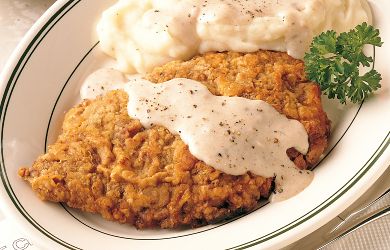
Chinese Students Hilariously Describe What They Think About Regional American Food
http://www.buzzfeed.com/ryanhatesthis/chinese-students-hilariously-describe-what-they-think-about#.uaN1Opy5v
Tuesday, February 17, 2015
Indigenous People of East Malaysia
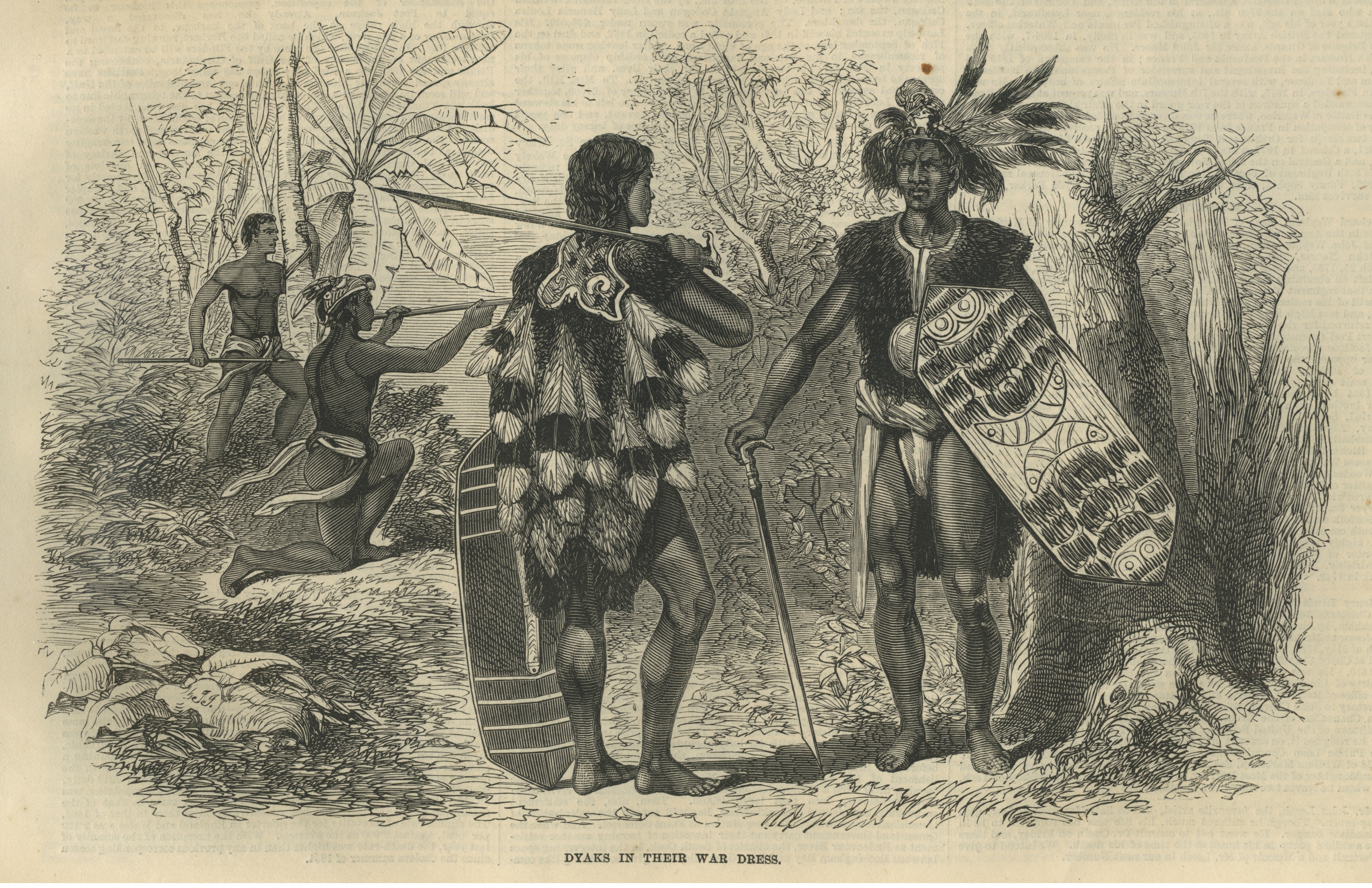
PowerPoint Presentation: http://www.slideshare.net/MarkMcGinley/indigenous-people-of-east-malaysia
Video
1900s video of Dyak Tribe
http://www.youtube.com/watch?v=F0L89Dcsxvw
Orang Asli
The Orang Asli (Malay for "original people") are the indigenous people of the Malay Peninsula. Historically, the Orang Asli lived nomadically in the rainforest acting as hunters and gatherers. More recently, most Orang Asli have ceased their nomadic existence, but many of them are still heavily dependent on the rainforest for their livelihoods. The Orang Asli make up a very small proportion of the population of Malaysia (about 0.5%) and their population is still largely rural, so most Malaysians from the city have had little interaction with them.
http://en.wikipedia.org/wiki/Orang_Asli
My first interaction with the Orang Asli came when I visited Tigga Kingston and her bat research group at Krau Wildlife Reserve in Pahang in March 2009. Because bat trapping took place early in the morning and late in the evening I had a lot of time during the middle of the day. Because I was pretty sure that I would get lost if I wandered too far into the rainforest, the only place for me to explore during the middle of the day was the nearby Orang Asli village. Not too long ago these Orang Asli were living in the rainforest, but they were now living in government housing. The camera that I took along on that trip stopped working after only 2 photos, so I can't share any of the sights with you.
The village was isolated and it was clear that the locals were not used to seeing strange white guys walking around their neighborhoods. When people saw me they originally looked rather shy followed either by total surprise or a look of bewilderment that anyone would be walking around in the heat of the day (you know mad dogs, English men, and crazy guys from Texas). The people were very friendly and I always got a wave and a smile where ever I went. The kids were expecially interested in the new stranger, so I often felt like the Pied Piper leading a group of kids along the road. There was a boarding school for Orang Asli kids located at the end of the village and some of the older kids, maybe around 6th grade, knew enough English to be able to talk a little bit to me. They were quite impressed when they learned that I was from Texas.
Here are some photos that Tigga took when she visited a Orang Asli kindergarten near Krau.

Photo from Malaysian Bat Education Adventure
Tigga hired three Orang Asli men, a father and two of his teen-aged sons, as part of the research group (they helped to set up the bat traps). The Dad was probably about my age (but it was hard for me to guess his exact age) and was probably born in the rainforest. When we spent time in the rainforest at night waiting to check the traps, the two sons would kill the time by texting their friends and singing along with pop songs that they played on their cells phones. Quite a change after only one generation!
PowerPoint Presentation: A very brief introduction to Indigenous Peoples of Malaysia: Orang Asli
http://www.slideshare.net/MarkMcGinley/indigenous-peoples-of-malaysia?utm_source=ss&utm_medium=upload&utm_campaign=quick-view
Videos
Uncontacted tribes http://www.uncontactedtribes.org/evidence
http://www.youtube.com/watch?v=4pNmykfZoOE
http://www.youtube.com/watch?v=F0L89Dcsxvw
http://en.wikipedia.org/wiki/Orang_Asli
My first interaction with the Orang Asli came when I visited Tigga Kingston and her bat research group at Krau Wildlife Reserve in Pahang in March 2009. Because bat trapping took place early in the morning and late in the evening I had a lot of time during the middle of the day. Because I was pretty sure that I would get lost if I wandered too far into the rainforest, the only place for me to explore during the middle of the day was the nearby Orang Asli village. Not too long ago these Orang Asli were living in the rainforest, but they were now living in government housing. The camera that I took along on that trip stopped working after only 2 photos, so I can't share any of the sights with you.
The village was isolated and it was clear that the locals were not used to seeing strange white guys walking around their neighborhoods. When people saw me they originally looked rather shy followed either by total surprise or a look of bewilderment that anyone would be walking around in the heat of the day (you know mad dogs, English men, and crazy guys from Texas). The people were very friendly and I always got a wave and a smile where ever I went. The kids were expecially interested in the new stranger, so I often felt like the Pied Piper leading a group of kids along the road. There was a boarding school for Orang Asli kids located at the end of the village and some of the older kids, maybe around 6th grade, knew enough English to be able to talk a little bit to me. They were quite impressed when they learned that I was from Texas.
Here are some photos that Tigga took when she visited a Orang Asli kindergarten near Krau.

Photo from Malaysian Bat Education Adventure
Tigga hired three Orang Asli men, a father and two of his teen-aged sons, as part of the research group (they helped to set up the bat traps). The Dad was probably about my age (but it was hard for me to guess his exact age) and was probably born in the rainforest. When we spent time in the rainforest at night waiting to check the traps, the two sons would kill the time by texting their friends and singing along with pop songs that they played on their cells phones. Quite a change after only one generation!
PowerPoint Presentation: A very brief introduction to Indigenous Peoples of Malaysia: Orang Asli
http://www.slideshare.net/MarkMcGinley/indigenous-peoples-of-malaysia?utm_source=ss&utm_medium=upload&utm_campaign=quick-view
Videos
Uncontacted tribes http://www.uncontactedtribes.org/evidence
http://www.youtube.com/watch?v=4pNmykfZoOE
http://www.youtube.com/watch?v=F0L89Dcsxvw
History of East Malaysia
The Malaysian portion of Borneo is known as East Malaysia contains the two Malaysian states of Sarawak and Sabah as well as the independent nation of Brunei. It has quite an interesting and unique history.
PowerPoint Presentation: History of East Malaysia
http://www.slideshare.net/MarkMcGinley/history-of-east-Malaysia
Thursday, February 12, 2015
Physical Environment, Geography, and History of SE Asia

Here is a link to my quick and dirty, definitely non-expert, view of how the physical environment and geography have helped to shape the history of SE Asia.
http://www.slideshare.net/MarkMcGinley/physical-environment-and-history-of-se-asia-11923
Where the Heck is SE Asia?
Next, we will turn out attention to issues in SE Asia. I thought that it might help to post a few maps that will hopefully help us to become oriented.
Map of Southern Asia

Map of SE Asia

This map superimposes a map of the Indonesian Islands over the map of the continental US. I find that this map helps me to get a better understanding of the size of the region.
Remember that Malaysia is about the same size as New Mexico.

Map of Southern Asia

Map of SE Asia

This map superimposes a map of the Indonesian Islands over the map of the continental US. I find that this map helps me to get a better understanding of the size of the region.
Remember that Malaysia is about the same size as New Mexico.

Tuesday, February 10, 2015
NCSE Environmental News Digest.

The National Council for Science and the Environment (NCSE; Http://ncseonline.org) is a not-for-profit organization dedicated to improving the scientific basis for environmental decision making. NCSE specializes in programs that foster collaboration between diverse institutions and individuals creating and using environmental knowledge, including research, education, environmental, and business organizations as well as governmental bodies at all levels.
Texas Tech University recently joined the NSCE University Affiliates Program. One of the benefits of this affiliation is that we have access to the NCSE News Service, a daily list of links to articles about environmental issues from around the world.
This is a great resource and I would like you to get in the habit of checking it out on a daily basis. To receive the news service via email each day you need to (1) click on the link above and (2) enter your ttu.edu email into the blue box that says "Receive the daily news by email".
South Plains Water Issues Llinks
http://www.nationofchange.org/four-dollars-gallon-water-dream-monsanto-and-other-corporations-wanting-privatize-water-1334762956
http://amarillo.com/news/local-news/2011-06-24/group-buys-mesa-water-rights
http://lubbockonline.com/stories/071103/sta_0711030081.shtml
http://lubbockonline.com/stories/041202/reg_041202034.shtml
http://www.businessweek.com/news/2011-07-14/pickens-water-to-riches-dream-fizzles-as-texas-cities-buy-rights.html
http://amarillo.com/news/local-news/2011-06-24/group-buys-mesa-water-rights
http://lubbockonline.com/stories/071103/sta_0711030081.shtml
http://lubbockonline.com/stories/041202/reg_041202034.shtml
http://www.businessweek.com/news/2011-07-14/pickens-water-to-riches-dream-fizzles-as-texas-cities-buy-rights.html
http://www.csmonitor.com/2002/0813/p03s01-usgn.html - prairie dog, pet or pest
http://www.livestockweekly.com/papers/03/11/06/whlhindman.asp - small rodents causing large headaches for Lubbock
The Dust Bowl
 The Dust Bowl was an environmental catastrophe, a natural hazard (multiannual drought) in the 1930s in the Southern Great Plains of the USA, resulting in the activation of a geomorphic process (intense wind erosion) which, when human society could not adapt to it, cascaded into unprecedented agricultural, economic, and societal collapse in its core region. Over the years, the cause of the Dust Bowl has been variably ascribed to specific climatic or meteorological phenomena or land management practices. Drought and wind erosion have been notable phenomena in the Southern Great Plains throughout the Holocene, occurring long before conversion of the land to agricultural use, and still continue today. (Gill and Lee 2006)
Further Readings
Dust Bowl http://www.eoearth.org/article/Dust_Bowl
The Dust Bowl http://www.u-s-history.com/pages/h1583.html
On the cause of the 1930s Dust Bowl. Science 2004 http://www.sciencemag.org/content/303/5665/1855.abstract
NASA explains the Dust Bowl Drought http://www.nasa.gov/centers/goddard/news/topstory/2004/0319dustbowl.html
A critical evlauation of the Dust Bowl and its causes. Gill and Lee. 2006
http://adsabs.harvard.edu/abs/2006AGUFM.A44C..06G
What America Looked Like: The Dust Bowl (2012 in The Atlantic. lots of good photos)
http://m.theatlantic.com/national/archive/2012/02/what-america-looked-like-the-dust-bowl/253220/#slide3
Misery on a Grand Scale: The Drought of today and Yesteryear. Wynan Meinzer is a photographer who teachers photography at Tech. He teaches Wildlife Photography at Junction during Intersession which would be a great experience for all budding photographers.
http://www.wymanmeinzer.com/misery-on-a-grand-scale-the-drought-of-today-and-yesteryear/
Video
Surviving the Dust Bowl. PBS
http://video.pbs.org/video/1311363860/
Tuesday, February 3, 2015
History of the Llano Estacado

I have suggested many times that ecology plays an important role in the history of a region. The history of the Llano Estacado is certainly no exception. In order to understand the history of our region we need to study the effect of ecology on the lifestyle and settlement patterns of the Native Americans, the exploration and settlement patterns of the Spaniards, and the ultimate settlement patterns of the Anglo-Americans. Enjoy.
A Brief History of the Llano Estacado
http://www.slideshare.net/MarkMcGinley/history-of-the-llano-estacado
Playas
 Playas are an interesting, and relatively unique, ecosystem found on the Llano Estacado.
Readings
http://www.jstor.org/stable/pdfplus/1311091.pdf?acceptTC=true
http://www.eoearth.org/article/Playa_lake
From the Sibley Nature Center
Playas http://www.sibleynaturecenter.org/habitats/playas/index.html
To see a good powerpoint presentation (1) click on the above link, (2) scroll down to the section entitled "Related Resources, and (3) click on the link "Playas and Playa Lakes" listed under "Overview".
Playa Lakes of the southern Llano Estacado: Southern High Plains http://www.sibleynaturecenter.org/habitats/playas/masternaturalistreport.pdf
Great Reference
Loren Smith, a former TTU professor, has written the best scholarly reference about playas.
Playas of the Great Plains. 2003. Loren Smith. University of Texas Press
The Prairies of the Great Plains

I have come across a lot of useful information about grasslands, grasses, and prairies so I want to start a post to share these resources with you. This list (although exhausting) is not intended to be exhaustive; there are a lot more great reference out there. If you find references that you would like to share with the rest of the class then either post them as a blog comment or send them to me so that I I have come across a lot of useful information about grasslands, grasses, and prairies so I want to start a post to share these resources with you.
Here is a potentially great new resource that I just uncovered.
Encyclopedia of the Great Plains
http://plainshumanities.unl.edu/encyclopedia/
Grasses
Grasses http://www.eoearth.org/article/Grasses?topic=49480
Presentation from UW Botany http://www.botany.wisc.edu/courses/botany_400/Lecture/0pdf/30bPoaceaeBW.pdf
Grasslands
Overview of World Grasslands http://www.bcgrasslands.org/library/world.htm
Prairies
1) Tall Grass Prairie
Tall Grass Prairie http://en.wikipedia.org/wiki/Tallgrass_prairie
Splendor of the Grass http://environment.nationalgeographic.com/environment/habitats/splendor-of-grass/
Big Bluestem (Andropogon gerardii)
http://plants.usda.gov/plantguide/pdf/pg_ange.pdf"
http://www.wildflower.org/plants/result.php?id_plant=ANGE
Switchgrass (Panicum virgatum)
http://plants.usda.gov/java/profile?symbol=PAVI2
http://www.wildflower.org/plants/result.php?id_plant=PAVI2
Indiangrass (Sorghastrum nutans)
http://plants.usda.gov/java/profile?symbol=SONU2
http://www.wildflower.org/plants/result.php?id_plant=SONU2
2) Mixed Grass Prairie
The Mixed Grass Prairie ecoregion http://outdoornebraska.ne.gov/wildlife/programs/legacy/pdfs/chapter6.pdf
Little Bluestem (Schizachyrium scoparium)
http://plants.usda.gov/java/profile?symbol=SCSC
http://www.wildflower.org/plants/result.php?id_plant=SCSC
Western Wheatgrass (Agropyron smithii now Pascopyrum smithii)
http://plants.usda.gov/java/profile?symbol=PASM
3) Short Grass Prairie
Southern Short Grass Prairie ecoregion http://fws-case-12.nmsu.edu/cwcs/pdfdocs/ch5_southern_shortgrass.pdf
Blue Grama (Bouteloua gracilis)
http://plants.usda.gov/java/profile?symbol=BOGR2
http://www.wildflower.org/plants/result.php?id_plant=BOGR2
Buffalograss (Buchloe dactyloides now Bouteloua dactyloides)
http://plants.usda.gov/java/profile?symbol=BODA2
Prairie Ecoregions (WWF)
Tall Grass Prairie
1) Northern Tall Grasslands http://www.eoearth.org/article/Northern_tall_grasslands
2) Central Tall Grasslands http://www.eoearth.org/article/Central_tall_grasslands
3) Flint Hills Tall Grasslands http://www.eoearth.org/article/Flint_Hills_tall_grasslands
Mixed Grass Prairie Central and Southern mixed grasslands
http://www.eoearth.org/article/Central_and_Southern_mixed_grasslands
Short Grass Prairie
1) Northern Short Grasslands http://www.eoearth.org/article/Northern_short_grasslands
2) Western short grasslands http://www.eoearth.org/article/Western_short_grasslands
Texas Grasslands
Grasslands http://www.tshaonline.org/handbook/online/articles/gqg01
Texas Grasses http://botany.csdl.tamu.edu/FLORA/taes/tracy/610/
Prairie Issues
Regional Trends of Biological Resources- Grasslands USGS (lots of good info here)
http://www.npwrc.usgs.gov/resource/habitat/grlands/index.htm#contents
Regional Trends of Biological Resources- Grasslands- Prairies Past and Present
http://www.npwrc.usgs.gov/resource/habitat/grlands/pastpres.htm
Regional Trends of Biological Resources- Grasslands
http://www.npwrc.usgs.gov/resource/habitat/grlands/grasses.htm
Tallgrass prairie: the invasion of woody shrubs
http://www.esa.org/esablog/field/tallgrass-prairie-the-invasion-of-the-woody-shrubs/
Declining grassland biodiversity
http://www.eoearth.org/article/Declining_grassland_biodiversity?topic=49480
The Tallgrass Prairie: An Endangered Landscape http://www.csa.com/discoveryguides/prairie/review.pdf
Grassland Issues http://www.bcgrasslands.org/grasslands/grasslanddisturbances.htm
Powerpoint Presentation
Here is a link to the powerpoint presentation I showed in class.
http://www.slideshare.net/MarkMcGinley/prairies-of-the-great-plains
The Llano Estacado

The local region surrounding Lubbock is known as the Llano Estacado. There are a lot of people with interests in this region who know much more about it than I do, so rather than me introducing the topic to you during class I would like you to read the following article and view the following Powerpoint Presentation.
Readings
Llano Estacado http://www.tshaonline.org/handbook/online/articles/ryl02
Powerpoint Presentation
Here is a link to a powerpoint presentation on the Habitats of the Llano Estacado prepared by Sibley Nature Center in Midland.
To access this presentation click on this link http://www.sibleynaturecenter.org/habitats/index.html
and then click on the link "Habitats of the Llano Estacado".
Subscribe to:
Comments (Atom)